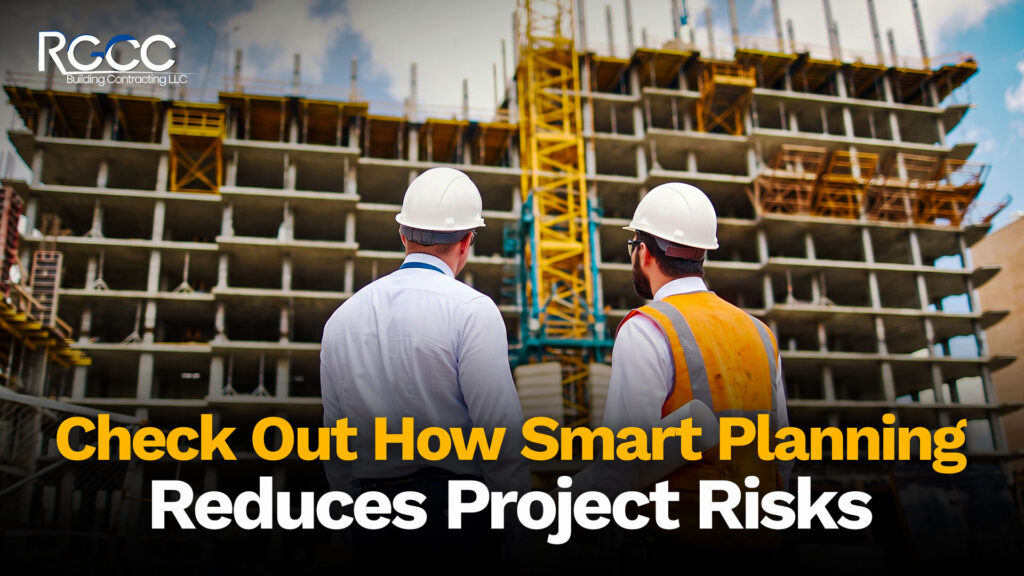
Commercial developments include different moving parts such as planning, designing, construction, handover, and long-term asset performance. However, without proper coordination, projects may face delays, budget challenges, quality concerns, and operational constraints. This is where integrated project management becomes essential.
Keeping every stage of development within a structured approach allows investors to reduce risks, improve efficiency, and ensure that commercial assets are delivered on time and ready for long-term success.
Building a Strong Foundation Through Strategic Planning
A successful commercial project possesses detailed initial planning that defines the project objectives while evaluating site requirements and coordinating stakeholders to establish a realistic timeline to create a clear roadmap for execution.
Effective project management ensures that every decision made during the planning stage supports the overall goals. Potential risks can be identified early, which allows the team to resolve issues before they impact the construction progress. This proactive method minimizes costly disruptions by maintaining momentum throughout the development stage.
Seamless Coordination During Commercial Construction
A successful commercial construction project depends on more than quality materials and skilled workmanship. Moreover, it requires continuous collaboration between architects, engineers, consultants, suppliers, and construction teams.
Hence, an integrated project management approach keeps every stakeholder connected by ensuring work progress based on the schedule. This will help to maintain the quality standards while regular monitoring, efficient communication, and careful resource allocation help to reduce delays at every stage.
Therefore, by maintaining complete visibility across the project, developers can respond quickly to unexpected challenges while keeping the construction works on track.
Delivering Assets with Long-Term Performance in Mind
Commercial development success extends beyond the completion of construction. Investors benefit most when properties are designed and delivered with long-term operational efficiency in mind.
Integrated project management ensures that every aspect of the development, including structural integrity and building systems to functionality, is carefully coordinated before handover. This creates commercial assets that are prepared for occupancy and support business operations to maintain their value over time.
The Importance of Building Maintenance
A well-developed commercial property constantly performs when supported by effective building maintenance. Regular inspections, preventive servicing, and timely repairs help preserve building performance, reduce unexpected costs, and extend the lifespan of essential systems.
Planning maintenance during the development phase can ensure that the facilities remain efficient. This proactive approach strengthens tenant satisfaction while protecting the long-term value of the investment.
An Integrated Approach to Commercial Development
At RGCC Contracting LLC, our commercial developments are managed through a coordinated process that exhibits planning, execution, quality control, and final handover. By integrating every stage of the project, developments are delivered with greater efficiency, reduced risk, and a strong focus on long-term asset performance.
Instead of considering every phase as a different activity, we adopt an integrated approach that creates continuity throughout the development journey, which results in commercial assets that are built to perform.
Conclusion
Integrated project management is more than a method of coordinating construction activities; it is a strategy that reduces risk, improves quality, and creates investment-ready commercial assets. When planning, commercial construction, and building maintenance are considered under a single development approach, investors can attain greater confidence that their projects will deliver lasting value.